


Struggling for Hallway Inspiration? 50+ Dark Woodwork and Two-Tone Examples from Painters and Decorators in Cheltenham
Is your hallway feeling a bit unloved? It’s the first thing you see when you walk through the door and the last thing your guests notice before they leave, yet it often ends up being the most neglected space in the house. If you’re staring at a long, narrow corridor of plain white walls and chipped skirting boards, you aren’t alone.
Many homeowners in Cheltenham and across Gloucestershire struggle to find the right balance between "practical" and "stylish" for their entryways. At Mitten’s Decorating, we’ve been helping locals transform these high-traffic areas into stunning transitions that set the tone for the rest of the home.
Whether you live in a grand Regency villa in Montpellier or a cozy terrace in Leckhampton, this guide is packed with over 50 ideas and examples of dark woodwork and two-tone schemes to get your creative juices flowing.
Why Dark Woodwork is Making a Massive Comeback
For decades, the "standard" for interior decorating in Cheltenham was white gloss, on everything. Skirting boards, architraves, and doors were all expected to be bright white. But things are changing.
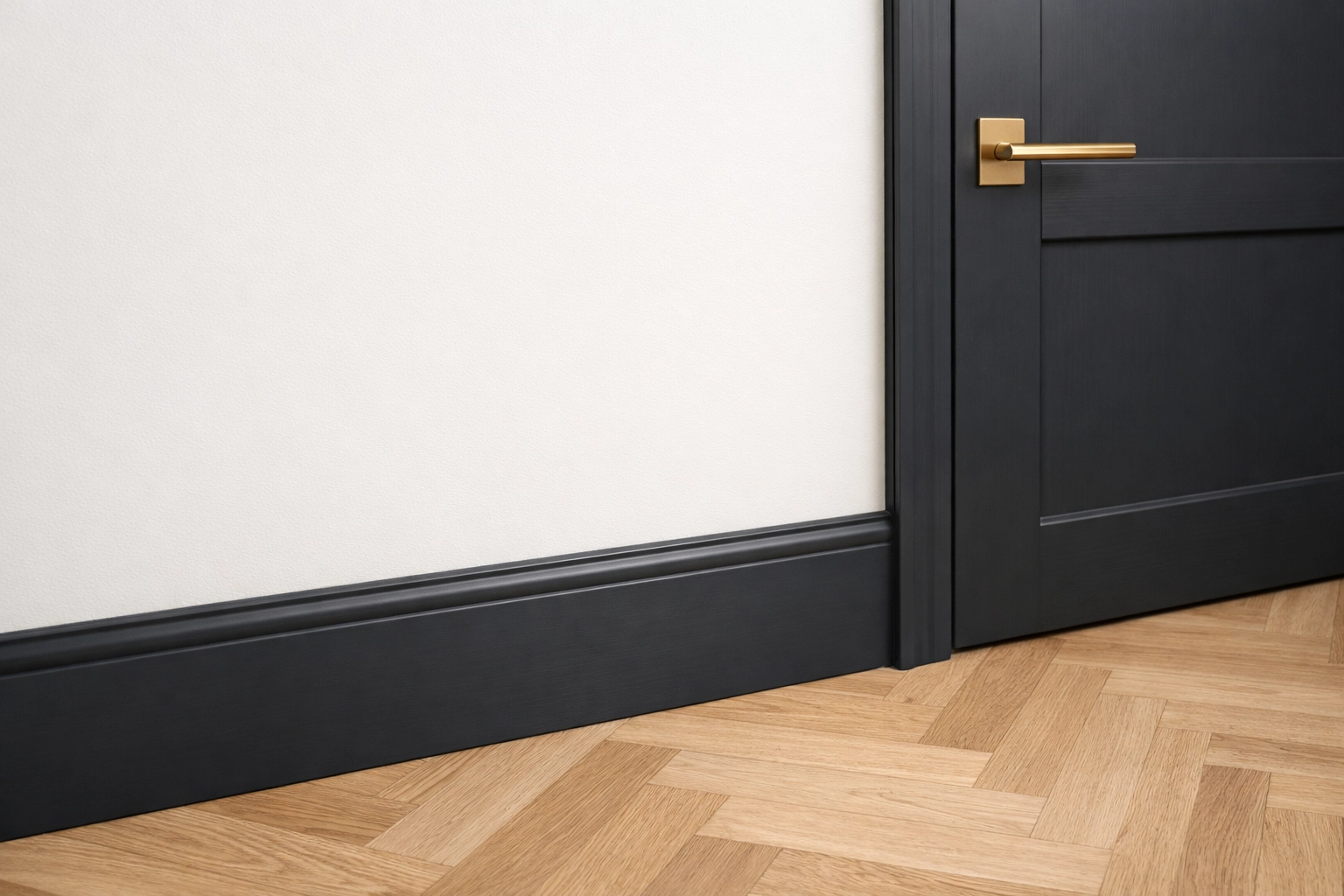
Looks like the trend for 2026 is all about grounding a space. By opting for dark woodwork, think deep walnuts, charcoal greys, or even off-blacks, you create a frame for your rooms. It’s a sophisticated look that hides those inevitable scuffs from shoes and vacuum cleaners much better than white paint ever could.
10 Quick Dark Woodwork Concepts
The Walnut Stain: Using a rich walnut stain on original pine doors for a high-end, organic feel.
Charcoal Skirtings: Painting skirting boards in a matte charcoal to contrast against pale grey walls.
Black Architraves: Framing doorways in black to act like a picture frame for the next room.
Moody Mudrooms: Dark navy woodwork in the boot room area to mask dirt and wear.
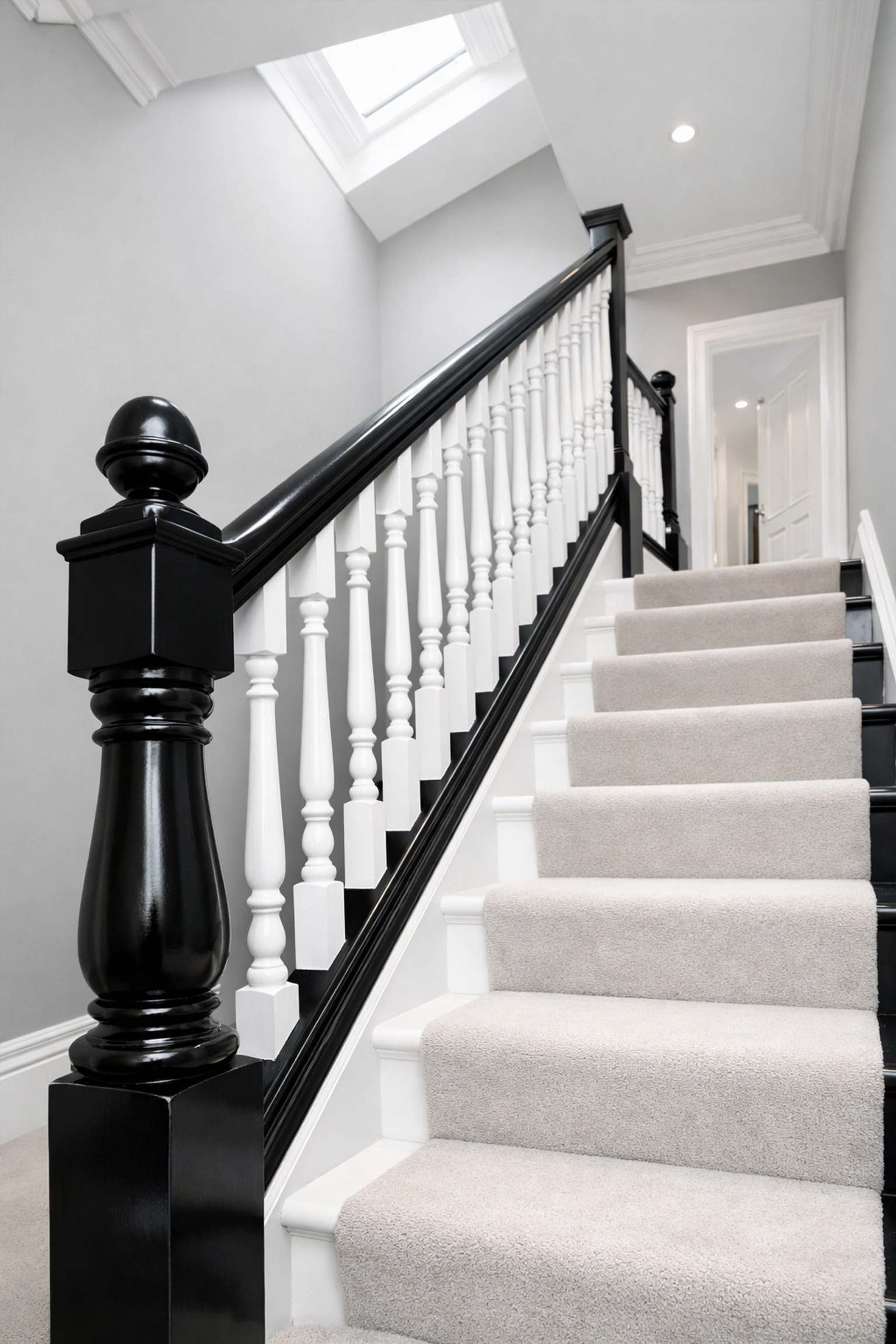
The Monochrome Mix: Black stairs with white spindles for a classic, high-contrast look.
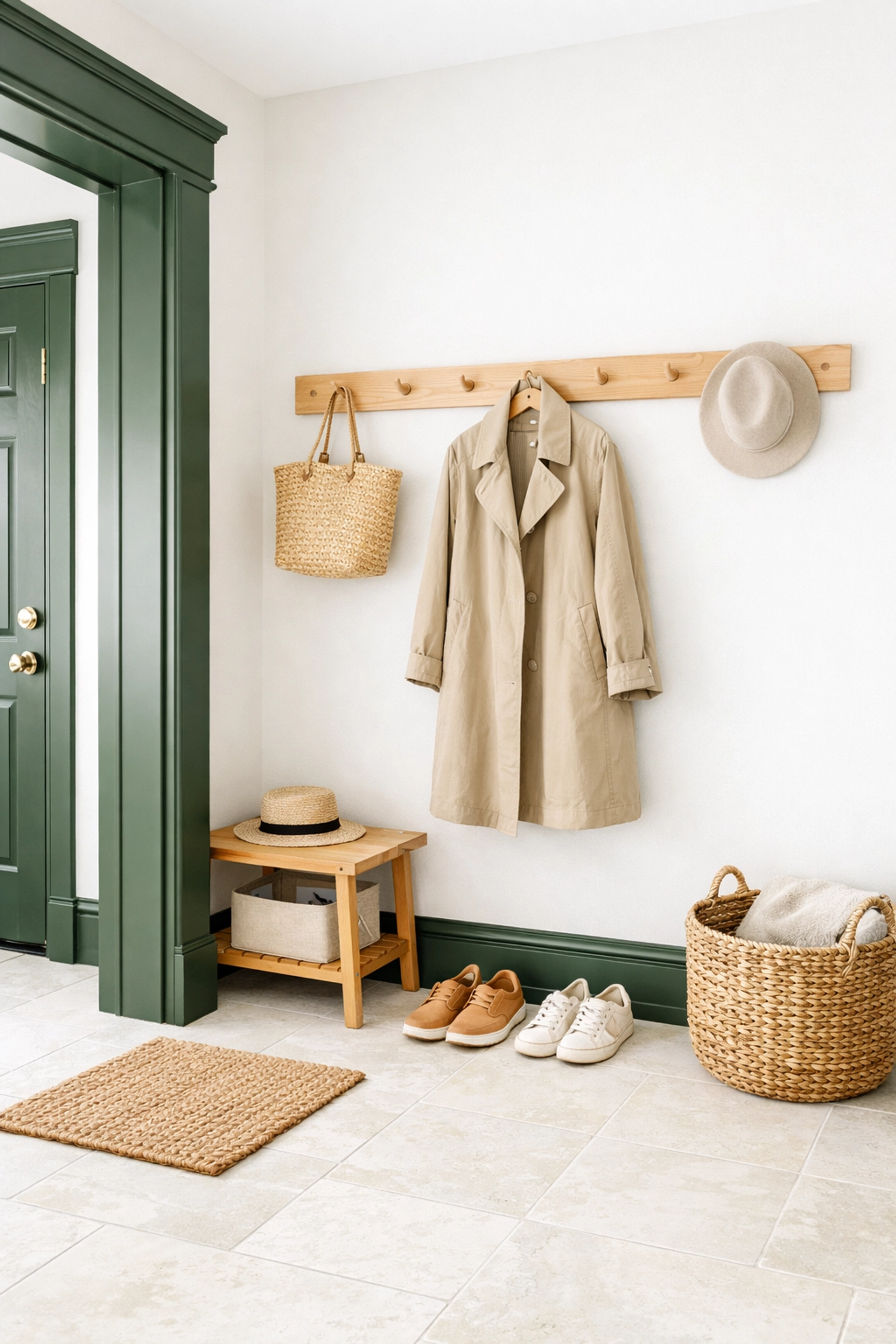
Deep Forest Green: Using dark green on window frames and shutters for a botanical vibe.
Chocolate Brown Doors: A warm alternative to black that feels softer and more traditional.
Glossy Black Banisters: High-shine finishes on handrails for a touch of luxury.
Slate Grey Capping: Using slate tones on the top rail of wall panelling.
Iron Grey Trim: A modern, industrial take on traditional trim.
Two-Tone Magic: Breaking Up the Walls
Is your hallway looking a bit "tunnel-like"? A two-tone paint scheme is the easiest way to fix this. By splitting the wall horizontally, you can change the visual proportions of the room.
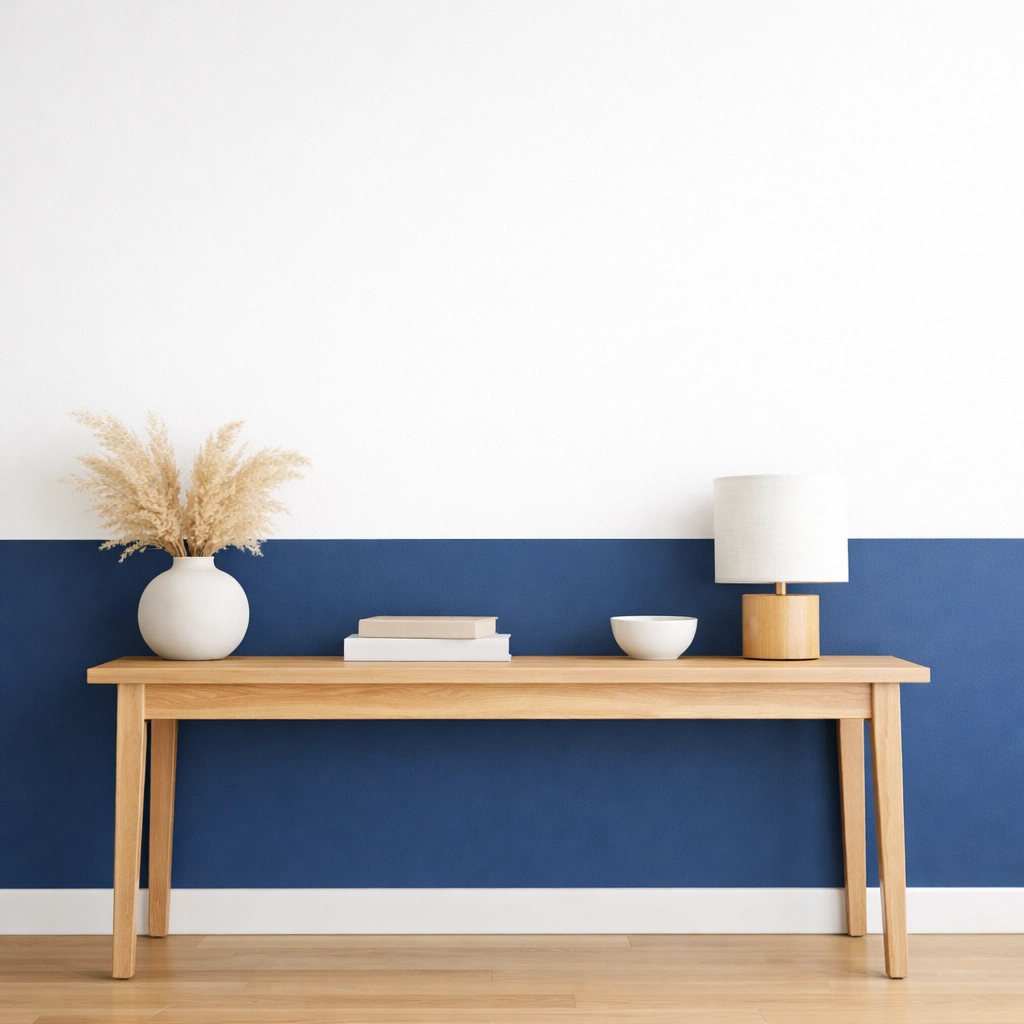
The most common way to do this is "colour capping." This involves painting the bottom third (or half) of the wall in a darker or bolder shade and keeping the top section lighter. This is particularly effective in Cheltenham’s older properties with high ceilings. It keeps the space feeling airy at eye level while adding character at ground level.
10 Two-Tone Combinations We Love
Navy & Cream: A timeless nautical feel that’s perfect for painters and decorators in Cheltenham working on period homes.
Sage & Off-White: Calming and earthy, bringing the Cotswold hills inside.
Terracotta & Sand: A warm, Mediterranean approach for sunny hallways.
Deep Plum & Lavender: A sophisticated, tonal look for a bold entrance.
Dark Teal & Pearl: High-end and contemporary.
Slate & Silver: A cool-toned, modern aesthetic.
Forest Green & Pale Straw: Perfect for houses with lots of indoor plants.
Burgundy & Soft Grey: Adds a sense of heritage and history.
Midnight Blue & Crisp White: Ultra-sharp and clean.
Mustard & Stone: For those who want a bit of "pop" without it being overwhelming.
50+ Examples of Hallway Inspiration
When you’re looking for painters and decorators in Cheltenham, you want to see variety. Here is a breakdown of the 50+ ideas we’ve seen working wonders in Gloucestershire homes:
Bold & Dramatic (21–30)
These ideas are for those who aren't afraid of the dark.
Full Drenching: Painting the walls, woodwork, and ceiling all in the same dark shade (like Farrow & Ball’s Railings).
The Feature Ceiling: Keeping walls neutral but painting the ceiling a deep emerald green.
Glossy Ceilings: Using a high-gloss finish on a dark ceiling to reflect light.
Ombre Hallways: A gradual fade from dark at the bottom to light at the top.
Vertical Stripes: Using two shades of the same dark colour in alternating matte and gloss stripes.
Dark Panelling: Adding wainscoting and painting it a deep, moody blue.
Contrasting Radiators: Painting your radiators to match the dark woodwork so they disappear.
Hidden Doors: Painting the door and frame the exact same dark colour as the wall.
The Tonal Staircase: Each step painted a slightly different shade of grey.
Zoned Entries: Using a bold dark block of colour just around the front door area.
Classic & Timeless (31–40)
Perfect for the traditional villas of Montpellier and Prestbury.
Picture Frame Moulding: Darker shades inside the mouldings, lighter on the "frames."
The Dado Rail Classic: Dark colour below the rail, heritage wallpaper above.
Oak Stains: Enhancing natural oak woodwork with clear, protective oils.
Cream & Cocoa: A soft, dessert-inspired palette.
Grey-Green Woodwork: A very popular choice for painters and decorators in the Cotswolds.
Traditional Navy Skirtings: Pairing with antique gold accents.
Warm White Walls with Black Trim: The "modern farmhouse" look.
Neutral Two-Tone: Beige on the bottom, off-white on top for a subtle lift.
Eggshell Finishes: Avoiding gloss for a softer, more modern glow.
Natural Stone Tones: Using colours inspired by Cotswold stone.
Creative & Modern (41–50+)
For the contemporary builds in Bishops Cleeve or Charlton Kings.
Geometric Splits: Breaking the two-tone rule with diagonal lines.
Painted "Runners": Painting a dark stripe down the centre of wooden stairs.
Neon Accents: Dark woodwork with a tiny pop of neon pink or yellow on a shelf edge.
Chalkboard Walls: Dark, functional, and great for families.
Metallic Trims: Using copper or gold paint on the very edge of dark architraves.
Stencilled Floors: Dark painted floors with a light stencil pattern.
Colour Capped Door Frames: Stopping the wall colour halfway up the door frame.
Mural Transitions: Using a dark base colour that transitions into a hand-painted mural.
Textured Finishes: Using limewash or clay paints for a mottled, dark look.
Highlighting Nooks: Painting the inside of a hallway alcove a dark, contrasting colour.
How to Get the Look: Just a Few Easy Steps
Ready to transform your hallway? You don't need a massive renovation budget. Often, the biggest impact comes from just a few easy steps.
Prep is King: Hallways take a beating. We always recommend a thorough sand and a high-quality primer, especially when going from light to dark woodwork.
Pick Your Sheen: For dark woodwork, an eggshell or satin finish usually looks more modern than a high gloss.
Think About Lighting: Dark colours absorb light. If your hallway is naturally dim, ensure you have good overhead lighting or wall sconces to highlight your new decor.
Test Your Samples: Colours look different in the morning than they do under lightbulbs at night. Paint a large piece of card and move it around the hallway.
Call in the Pros: If the thought of painting thirty spindles on a staircase fills you with dread, it might be time to look for professional painters and decorators in Cheltenham.
Frequently Asked Questions (Cheltenham Edition)
Does dark woodwork make a small hallway look smaller? Not necessarily! While it sounds counter-intuitive, dark woodwork can actually make the walls feel like they are receding, especially if paired with a clever two-tone wall scheme. It adds depth that plain white walls just can't provide.
What is the best paint for high-traffic hallways in Gloucestershire? We always recommend "scuff-tough" or "durable matte" finishes for hallways. Brands like Tikkurila or Dulux Heritage offer fantastic options that can be wiped down without the paint coming off, essential if you have dogs or kids coming in from rainy walks in the Cotswolds!
How long does it take to decorate a hallway? A standard hallway, stairs, and landing usually takes a team of two about 3 to 5 days, depending on the amount of woodwork and whether we are wallpapering.
Can you paint over old brown varnish? Yes! It just takes the right preparation. We use specialist "shellac-based" primers that grip to the varnish and prevent any "bleeding" of the old wood stains into your new paint.
Need more help?
Transforming your hallway from a "walk-through" space to a "wow" space is one of the best investments you can make in your home. Whether you're interested in bold dark woodwork or a subtle two-tone colour capping effect, we’re here to help.
At Mitten’s Decorating, we pride ourselves on being the go-to painters and decorators in Cheltenham for homeowners who want quality and style. We cover everything from Leckhampton to the Cotswolds.
If you’re feeling overwhelmed by all these choices, don't worry. We can chat through your ideas and help you pick the perfect palette for your space.
Comments